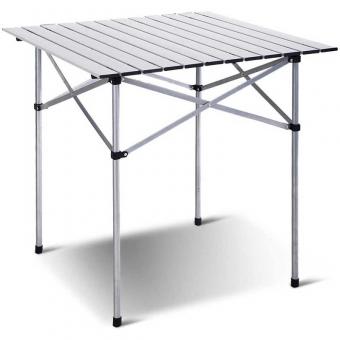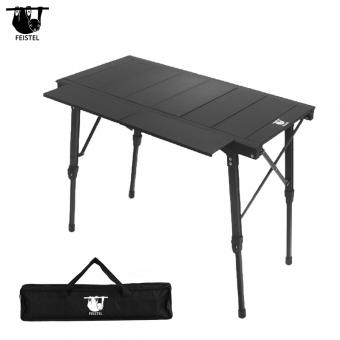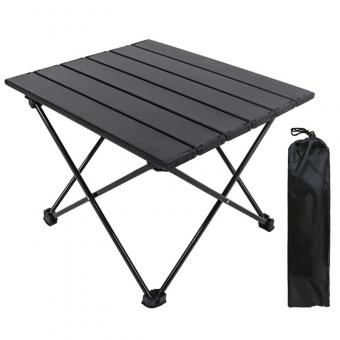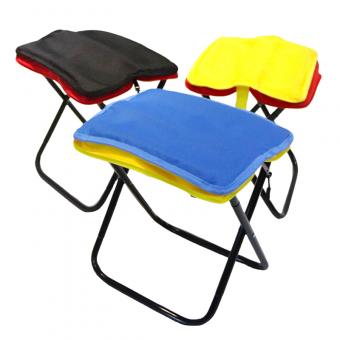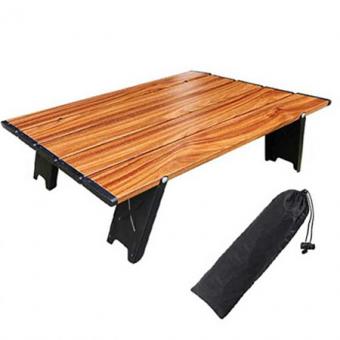
Marque : USINE ANHUI FEITEL Fabrication liée : OEM et ODM Produit : Une petite table de pique-nique légère et pliable, parfaite pour les activités de plein air. Fabriqué à partir de matériaux durables, il est portable et facile à installer.
neil bienvenue sur notre site !
apprendre encore plusFinding the most comfortable hammock for camping is more complicated than choosing the widest piece of fabric, the softest material, or the product with the highest stated weight capacity. A camping hammock is part of a suspended sleep system, and its real comfort depends on the relationship between hammock dimensions, suspension geometry, the user's body size, sleeping position, insulation, weather protection, fabric behavior, and the way the equipment is actually set up outdoors.
At FEISTEL, we develop and manufacture outdoor equipment, including camping hammocks and related products. From that perspective, we prefer to evaluate hammock comfort as a practical system rather than declare one configuration universally superior. The hammock that feels excellent during a warm afternoon rest may be unsuitable for a cool overnight trip. A wide double hammock may feel exceptionally spacious for one camper while being less convenient for someone focused on minimum backpack weight.
The most comfortable camping hammock is the one that fits the sleeper, the trip, and the expected weather rather than a universal product winner.
Longer gathered-end hammocks usually provide adults with more space for diagonal positioning, but length alone cannot guarantee a comfortable sleeping posture.
A double hammock can provide a spacious sleeping surface for one camper, but “double” does not automatically mean two adults will sleep comfortably together overnight.
Suspension geometry, bottom insulation, bug protection, and rain protection can influence overnight comfort as much as the hammock body itself.
Compressed sleeping-bag insulation loses thermal resistance, which helps explain why pads and underquilts are commonly used beneath hammock campers in cool conditions.
Comfort is not one measurable specification. It is the result of several variables interacting at the same time.
A hammock can feel comfortable because its fabric is soft against the skin. Another camper may care more about being able to lie diagonally without shoulder pressure. Someone camping in summer may prioritize airflow, while the same person in autumn may care far more about underside insulation.
The intended length of use also changes the definition of comfort.
For twenty minutes at a campsite, a compact hammock that opens quickly may feel ideal. For eight hours of overnight sleep, small pressure points, poor insulation, inadequate rain protection, or an awkward body position become much more noticeable.
We therefore recommend separating hammock comfort into several practical questions:
Does the hammock provide enough usable length and width for the sleeper?
Can the sleeper find a comfortable diagonal position?
Does the suspension allow repeatable adjustment?
Can the camper stay warm from below?
Is insect protection required?
Does the tarp provide enough weather coverage?
Can the complete system still be carried comfortably?
Can the user enter, exit, adjust, and store gear easily?
A hammock that performs well across the factors that matter to a particular camper is a more meaningful definition of “most comfortable” than a universal ranking.
One of the easiest ways to make a poor hammock recommendation is to confuse daytime lounging with overnight sleeping.
During a warm afternoon, users may only need enough fabric to recline comfortably and enough suspension to hang between two trees. The hammock does not necessarily need an underquilt, mosquito net, rain tarp, ridgeline organizer, or overnight storage.
Once the same hammock becomes a sleeping shelter, the requirements change.
The camper may remain suspended for six, eight, or more hours. Temperatures can drop substantially after sunset. Air continues moving beneath the body. Mosquitoes may become active. Rain that was not expected when the hammock was set up may arrive after midnight.
This is why we separate:
lounging comfort;
sleeping geometry;
thermal comfort;
weather comfort;
practical campsite comfort.
A product can perform extremely well in one category without being the best choice in another.
Claims that hammocks automatically improve sleep or produce healthier spinal alignment should be treated cautiously.
One of the relatively few studies directly comparing habitual hammock sleepers with bed sleepers examined 68 college students in southern Mexico. Thirty-three participants normally slept in beds and thirty-five normally slept in hammocks. Objective sleep data were collected by actigraphy over seven consecutive days.
The researchers found no statistically significant difference in subjective sleep measures between the two groups. Individual characteristics such as sex and body mass index explained some objective sleep measures better than sleeping device alone. [1]
This is an important result for a responsible camping guide.
It does not show that hammocks are uncomfortable. It shows that current scientific evidence does not justify telling every camper that sleeping in a hammock will automatically produce better sleep.
A gathered-end camping hammock is a flexible three-dimensional surface rather than a horizontal mattress.
When a sleeper lies directly along the centerline from one gathered end toward the other, the body tends to follow the deepest curve of the hammock. This is the familiar “banana” position that many beginners associate with hammock sleeping.
Experienced hammock campers frequently shift the body diagonally across the fabric instead.
This changes how the body interacts with the curved surface. It can allow the shoulders, torso, hips, and legs to occupy a flatter effective path across the hammock than the central longitudinal line.
The result still is not mathematically flat. The person remains supported by flexible fabric.
However, diagonal positioning is one of the most practical techniques for making a gathered-end hammock feel less sharply curved.
The outcome depends on more than the angle of the body. It also depends on hammock length, hammock width, fabric stretch, sag, user height, body dimensions, ridgeline configuration, and suspension geometry.
This is why we avoid claiming that one simple dimension guarantees a “flat lay.”
Hammock length is one of the most important specifications to consider for overnight comfort.
Longer gathered-end hammocks generally provide adult sleepers with more fabric length for creating sag and experimenting with diagonal body positioning.
This is one reason approximately 10- to 11-foot hammock bodies have become common among overnight hammock campers.
However, we would not describe 11 feet as a scientifically proven universal optimum.
A shorter camper may be perfectly comfortable in a shorter hammock. A tall camper may prefer more length. Width, textile stretch, and suspension geometry can alter the result significantly.
For product development and wholesale purchasing, the better question is: Who is expected to sleep in this hammock?
The objective should not be copying the length of a popular competitor. It should be creating enough usable fabric for the target user without adding unnecessary mass and packed volume.
Width creates additional positioning freedom.
A broad hammock allows the user to rotate the body farther across the fabric, sit sideways more comfortably, or share the hammock for daytime lounging.
More width is especially noticeable in products marketed as double hammocks.
However, increasing width indefinitely does not guarantee increasing comfort.
Excess fabric can create higher sidewalls around a smaller sleeper. It can add weight and packed volume. Depending on the cut and suspension, it may also create loose material around the shoulders or face.
This is why hammock width should be evaluated relative to the intended user and use case.
One relevant example from the FEISTEL hammock collection is the 300 × 200 cm Double Camping Hammock with Straps and Carry Bag.
The current published configuration describes:
The 200 cm width is particularly relevant to comfort. A solo camper has more fabric available for diagonal positioning than in a much narrower hammock, while the configuration also supports social two-person lounging when users remain within the manufacturer's specified limits.
The stated load capacity should be treated as a published product specification. Where capacity is important to a wholesale purchase or safety claim, buyers should request documentation applicable to the exact production configuration.
Not necessarily.
“Double” is commonly used to describe increased width, capacity, or intended two-person lounging.
Two adults may enjoy relaxing together in a broad hammock during the day. Sleeping in the same flexible surface all night introduces different considerations.
When one sleeper shifts position, the fabric moves under both people. Both bodies tend to move toward lower regions of the suspended surface. Shoulder space, temperature management, and independent movement become more difficult.
For many campers, a double hammock is therefore best understood as: a spacious hammock for one sleeper or a social lounging hammock for two.
Couples who place high value on uninterrupted sleep may prefer two individual hammock systems.
A diagonal lay means positioning the head toward one side of the hammock and the feet toward the opposite side rather than lying exactly parallel to the suspension line.
The technique uses the hammock's width as part of the sleeping surface.
In a sufficiently long and appropriately hung gathered-end hammock, the diagonal position can reduce the feeling that the knees and torso are being pushed into a deep center curve.
There is no one diagonal angle that fits every person.
Users should experiment with which side the head occupies, how far the feet move across the fabric, body position relative to the center, and amount of hammock sag.
Beginners often pull hammock suspension extremely tight because they assume tight fabric will create a flatter bed.
Gathered-end hammocks do not necessarily behave that way.
A moderate curve can make diagonal positioning easier and can prevent excessive suspension tension.
The often-repeated recommendation of roughly a 30-degree suspension angle is useful as a starting reference, but it should not be treated as a universal scientifically established comfort optimum.
Different hammock bodies, bridge designs, ridgelines, suspension systems, and tree spacing can require different geometry.
A better rule is: Do not assume tighter automatically means more comfortable.
Calf ridge is the term hammock campers often use for a concentrated band of fabric tension pressing upward beneath the lower leg.
Possible contributing factors include insufficient hammock length, too much suspension tension, insufficient sag, body placement too close to one end, an unsuitable diagonal position, and fabric stretch characteristics.
Calf ridge demonstrates why comfort should not be judged by fabric softness alone.
Some hammock campers deliberately position the foot end slightly higher.
The purpose is not to create a universal ergonomic angle. It is to compensate for the tendency of some sleepers to slide toward the center or foot side of the hammock.
A small adjustment can change where the user's body settles.
The gentle movement of a suspended hammock is one reason many people find hammock lounging relaxing.
There is scientific evidence that rhythmic movement can influence sleep physiology, but the evidence should be interpreted carefully.
A 2019 study in Current Biology tested 18 participants sleeping for a full night on a mechanically controlled rocking bed. The rocking frequency was approximately 0.25 Hz. Compared with a stationary condition, continuous rocking shortened latency to NREM sleep, increased N3 sleep duration, reduced arousals, and altered sleep-related brain oscillations. [2]
This provides a plausible biological explanation for why gentle rhythmic movement can feel relaxing during sleep.
It does not prove that every camping hammock recreates the same movement.
A free-hanging camping hammock responds to user movement, wind, suspension length, tree spacing, and fabric geometry.
The responsible conclusion is therefore: Gentle rhythmic motion may contribute to perceived hammock comfort, but camping hammocks have not been proven to universally improve sleep through rocking.
Some campers report sleeping better in hammocks than on sleeping pads. Others have exactly the opposite experience.
Current research does not justify promising universal sleep improvement.
The direct hammock-versus-bed study cited earlier found no significant difference in subjective sleep outcomes between habitual bed and hammock users. [1]
Controlled rocking-bed research demonstrates that movement can influence certain sleep parameters. [2]
Thermal comfort is one of the most important differences between afternoon hammock lounging and overnight hammock camping.
A sleeping bag provides warmth largely through lofted insulation that traps air.
When the sleeper lies on part of that insulation, body pressure compresses the fibers and reduces the loft beneath the body.
A 2026 study published in The Journal of The Textile Institute experimentally examined sleeping-bag insulation subjected to simulated body pressures from 0.02 to 2 kPa. All tested samples showed decreasing thickness and thermal resistance as pressure increased. [3]
This finding provides strong physical support for a problem hammock campers have recognized in practice for years: the insulation beneath a suspended sleeper does not perform the same way as fully lofted insulation above the body.
At FEISTEL, years of working with different hammock structures have taught us that comfort complaints rarely come from one specification alone. A hammock may be wide enough but hung too tightly. It may be long enough but paired with straps that restrict adjustment. It may feel excellent in warm weather yet become uncomfortable overnight because the user has not planned underside insulation.
This is why we do not begin hammock development by asking which single feature should be made larger, lighter, or stronger. We start by defining the user, environment, carrying method, and expected sleeping conditions.
In our experience, the best improvements usually come from matching the complete system to a clear use case. More width helps only when the user needs it. A lighter fabric matters most when the hammock is actually being carried over distance. Integrated mosquito protection becomes important only where insects are part of the environment. A stand becomes valuable where suitable anchors are unavailable.
We believe this system-based approach produces more useful hammock products than simply adding features until the specification sheet becomes longer.
Two common methods are used to provide underside insulation.
A sleeping pad goes inside the hammock with the sleeper.
Potential limitations include movement inside the hammock, narrow shoulder coverage, condensation or moisture sensation, and difficulty keeping the pad centered.
An underquilt hangs below the hammock rather than being compressed by body weight.
Potential disadvantages include additional specialist equipment, another suspension system to adjust, additional cost, and possible gaps if incorrectly fitted.
We would not state scientifically that an underquilt is always more comfortable.
Bottom insulation only addresses heat loss beneath the body.
The sleeper still needs adequate insulation above in cool conditions.
A conventional sleeping bag works, although entering and zipping the bag inside a hammock can feel restrictive to some campers.
Top quilts remove much of the underside material that would otherwise be compressed beneath the sleeper.
A realistic overnight system may contain:
This changes both weight and complexity.
A 450 g hammock cannot fairly be compared with a 1.2 kg integrated shelter if the lighter hammock still needs another 700 g of protection and insulation to perform the same job.
Sometimes.
A simple hammock and suspension used during warm, dry weather can be extremely light.
However, a three-season hammock shelter can require weather protection, insect protection, insulation, additional suspension, stakes and guylines.
At that point, the comparison should be: complete hammock shelter system vs complete tent shelter system.
Suspension is often treated as an accessory, but it controls the actual hammock geometry.
It affects setup speed, tree compatibility, adjustment range, weight, packability, environmental impact, and final hammock geometry.
Common approaches include daisy-chain straps, webbing with buckles, whoopie slings, ropes with knots, and hybrid systems.
For beginners, a system they can adjust confidently may be more useful than saving a small amount of weight.
Tree spacing is not standardized.
Short suspension systems limit options. Longer straps provide more flexibility but add material and weight.
The FEISTEL 300 × 200 cm double hammock currently lists two 250 cm adjustable straps.
Thin cord concentrates force onto a smaller contact area than wider webbing.
This is one reason wide tree straps are widely preferred for recreational hammock use.
Users should follow local park regulations, land-manager rules, Leave No Trace guidance, and manufacturer instructions.
There is no single correct distance because the answer depends on hammock length, suspension length, strap attachment height, desired sag, and hammock design.
The most practical solution is to practice with the actual hammock before travelling.
A structural ridgeline connects the two gathered ends of certain hammocks and helps limit how far apart those ends can move.
This can make hammock sag more repeatable even when tree spacing changes.
Repeatable geometry can lead to repeatable comfort.
For insect-heavy campsites, bug protection can be more valuable than an additional few centimeters of hammock width.
Common designs include integrated zippered nets, removable nets, and full external nets.
The FEISTEL hammock category includes portable hammock configurations with integrated mosquito netting.
A current model describes a 210T parachute nylon hammock combined with polyester mesh and suspension accessories.
A hammock body provides almost no overhead weather protection.
For overnight use in uncertain conditions, a tarp becomes part of the comfort system.
Common shapes include asymmetric, hexagonal, rectangular, and larger tarps with doors.
A tent usually provides a floor on which small objects can be placed. A hammock does not.
Useful options include ridgeline organizers, integrated pockets, attached stuff sacks, gear slings, and peak bags.
The hammock should normally be positioned so the user can sit into it naturally rather than climb into it.
Older campers or users with limited mobility should give these factors particular attention.
Parachute-style nylon is common in portable camping hammocks because it can combine low weight, compact packing, useful strength, and relatively quick drying.
However, the term “parachute nylon” should not be treated as proof of every performance characteristic.
A textile specification such as 210T provides useful construction information, but it does not independently establish maximum user weight, tear resistance, abrasion resistance, UV lifetime, water resistance, or seam strength.
Both nylon and polyester can produce successful outdoor hammocks.
Fabric specification, finishing, seam design, and exposure conditions matter more than the fiber name alone.
Loads must eventually transfer toward the narrower gathered ends and suspension components.
This makes edge construction and attachment areas particularly important.
A hammock can theoretically support a user's weight while still being uncomfortable because it is too short, too narrow, or excessively stretchy.
Weight capacity should therefore be treated as a structural specification rather than a comfort score.
Carabiners can appear to be a minor accessory, but they often transfer the complete suspended load.
For commercial sourcing, buyers should confirm material, dimensions, finish, closure design, rated strength where claimed, and appropriate verification.
Backpackers need to balance comfort against total system mass.
Compare hammock body weight, suspension weight, bug-net weight, tarp and stakes, underquilt or pad, top insulation, and complete packed volume.
Car campers are less constrained by every gram.
The user may reasonably choose a wider hammock, longer straps, a larger rain tarp, a heavier underquilt, additional pillows, storage organizers, or a portable hammock stand.
Tall users should pay particular attention to hammock length and width.
Larger users should compare both structural capacity and usable dimensions.
A double-layer hammock contains two layers of fabric in the body construction. This is different from a “double hammock.”
A hammock stand solves a fundamental limitation of tree-suspended camping: the campsite may not contain suitable anchors.
FEISTEL's Portable Hammock with Stand belongs to this comfort-oriented category.
Neither shelter wins universally.
The best shelter depends as much on terrain as on sleeping preference.
A cot provides a relatively flat elevated platform. A hammock provides a suspended flexible sleeping surface.
Maximum load is only one safety variable.
Real hammock safety also depends on healthy anchors, correct strap attachment, hardware condition, fabric integrity, seam condition, suspension geometry, and hang height.
Always follow the product's specific care instructions.
As general outdoor-equipment practice, remove sand and debris, inspect stitching, check straps separately, dry equipment before long-term storage, avoid unnecessary UV exposure, avoid harsh chemicals unless material compatibility is known, and keep sharp equipment away from the packed hammock.
Do not make your first complete overnight setup deep in the backcountry.
Practice near home or near a vehicle, then sleep an entire night in the system under controlled conditions.
|
Comfort Factor |
Suggested Importance |
What to Evaluate |
|
Sleeping geometry |
25% |
Length, width, diagonal positioning, pressure points |
|
Thermal comfort |
20% |
Bottom insulation, top insulation, expected temperature |
|
Suspension |
15% |
Adjustment range, repeatability, ease of setup |
|
Weather and insects |
15% |
Tarp, bug protection and coverage |
|
Fabric comfort |
10% |
Texture, stretch, seam positioning |
|
Packability |
10% |
Total system weight and volume |
|
Storage and usability |
5% |
Entry, pockets, organizers and nighttime access |
These percentages are an editorial decision framework, not a scientifically validated universal comfort model.
At FEISTEL, our hammock development process starts with intended use.
Possible product-development variables include hammock dimensions, fabric specification, single or double construction, strap length, suspension hardware, bug-net configuration, color, logo, accessories, carry bag, and retail packaging.
The most comfortable hammock for camping in 2026 is not defined by one material, one dimension, or one product feature.
Comfort emerges from a system.
For most campers, the largest improvements come from getting the fundamentals right: choose adequate hammock length, select useful width, learn diagonal positioning, create appropriate sag, use suspension you can adjust confidently, plan bottom insulation, use weather and insect protection when needed, evaluate complete system weight, and practice before travelling remotely.
Direct research has not shown that hammock sleepers universally experience better subjective sleep than bed sleepers. [1]
Controlled experiments suggest that gentle rhythmic rocking can influence sleep physiology, but laboratory rocking beds are not identical to camping hammocks. [2]
Thermal research provides much stronger support for one practical lesson: compressed insulation loses thermal resistance, which makes underside insulation an important consideration in cool-weather hammock camping. [3]
At FEISTEL, we believe the most useful question is not “Which hammock has the longest specification list?” It is “What could prevent this particular camper from sleeping comfortably tonight?”
catégories
nouveau blogue
Marque : USINE ANHUI FEITEL Fabrication liée : OEM et ODM Produit : Une petite table de pique-nique légère et pliable, parfaite pour les activités de plein air. Fabriqué à partir de matériaux durables, il est portable et facile à installer.
Marque : USINE ANHUI FEISTEL Fabrication de relations : OEM et ODM Produit : La chaise de lune pliable en fer métallique léger et personnalisé offre un soutien et un confort durables, idéale pour le camping en plein air, avec une conception compacte et portable pour un transport et un stockage faciles.
Marque : USINE ANHUI FEITEL Fabrication liée : OEM et ODM Produit : Table de pique-nique pliante portable d'extérieur : conception en aluminium légère et durable avec hauteur réglable, installation facile et sac de transport compact pour le camping, les pique-niques et les activités de plein air.
Marque : ANHUI FEITEL USINE Fabrication liée : OEM et ODM Produit : Une table de camping IGT BBQ polyvalente et portable avec des pieds réglables en hauteur. Idéal pour la cuisine en plein air, le camping et les pique-niques. Léger et pliable pour un transport facile.
Marque : USINE ANHUI FEITEL Fabrication liée : OEM et ODM Produit : Table pliante en aluminium compacte et légère, parfaite pour le camping, la plage ou les activités de plein air. Facile à transporter, robuste et idéal pour contenir des aliments et des boissons.
Marque : USINE ANHUI FEISTEL Fabrication de relations : OEM et ODM Produit : Cette chaise longue de camping pliable en bois est dotée d'un cadre robuste, d'une conception inclinable ergonomique et d'une structure pliante compacte, parfaite pour se détendre à la plage, au camping ou dans l'arrière-cour.
Marque : USINE ANHUI FEISTEL Fabrication de relations : OEM et ODM Produit : Cette chaise de camping pliante d'extérieur avec cadre en aluminium est dotée d'un dossier réglable, d'une conception légère mais robuste, offrant un confort portable pour le camping, les sorties à la plage, les pique-niques et la détente en plein air.
Marque : USINE ANHUI FEISTEL Fabrication liée : OEM et ODM Produit : Ce mini tabouret de randonnée combine un tissu Oxford résistant et pliable avec une poche astucieuse faisant office de trousse, offrant portabilité, confort et praticité pour le camping et les aventures en plein air.
Marque : USINE ANHUI FEISTEL Fabrication de relations : OEM et ODM Produit : Le lit de couchage de voyage pour équipement de randonnée en gros est un lit de camping pliable à hauteur réglable offrant un support robuste, une portabilité facile et un repos confortable pour les aventures en plein air.
Marque : USINE ANHUI FEITEL Fabrication liée : OEM et ODM Produit : Un lit de camping pliant portable ultraléger et compact, idéal pour la randonnée, doté d'un cadre durable, d'une installation facile et d'un sac de transport pratique pour les voyages.
RESTONS CONNECTÉS :